
by Armani Johnson ’23
Sometimes a game can literally become a matter of life and death.
Football Star Damar Hamlin who plays for the Buffalo Bills, nearly lost his life last Monday night, playing a game he loves, and a game his fans love seeing him play.
Hamlin tackled Cincinnati Bengals receiver Tee Higgins with less than 6 minutes left in the first quarter.
He stood up before collapsing shortly after, laying motionless. Hamlin was grounded for 19 minutes after suffering a cardiac arrest before an ambulance took him to UC Medical Center.
Luckily, thanks to the prompt response of Bill’s trainer Denny Kellington, as well as his immediate administration of CPR, Hamlin survived, and was just released from the hospital only 7 days after nearly losing his life.
While there are several potential causes for Hamlins cardiac arrest, cardiologists suggested that a rare phenomenon called “commotio cordis” was to blame.
Commotio cordis typically involves young predominantly male athletes with a sudden blunt, non penetrating, and innocuous appearing trauma to the anterior chest which results in cardiac arrest. It’s most common in baseball, softball, hockey, and tennis.
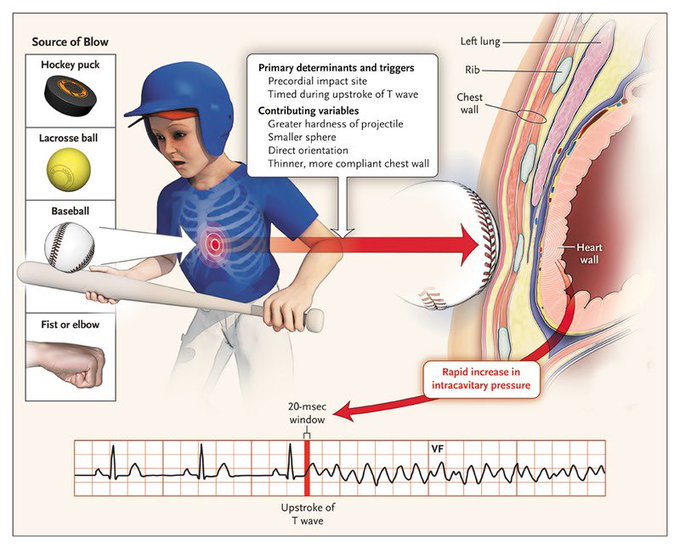
Put simply, when an object—usually a baseball or hockey puck, or in Hamlin’s case, the force of Higgin’s body, strikes one’s chest directly over the heart at a very specific and critical time during a heartbeat, an abnormal heart rhythm and ultimately cardiac arrest ensues.
According to Wikipedia, there are only about 10–20 cases annually in the United States, mostly occurring in boys with a mean age of 15. It occurs most frequently in baseball when the hard ball strikes an unprotected chest, although cases exist to show commotio cordis occurred
Luckily survival rates—which are improved dramatically based on response time and access to CPR and defibrillation—have improved from only 34% between 1993-2006, to nearly 60% between 2006-2012.

Experts suggest that while there is no fail safe preventive measure, better equipment and safety gear (chest protectors), as well as better training and coaching in terms of style of play and response measures, can help limit commotio cordis, and moreover prevent it resulting in death.
 Sales Talk
Leave a comment